
With the cost and demand of whey protein powder on the rise, we thought it would be a good time to debunk some of the myths around plant-based protein and provide you with some information about our high quality, cost-effective and tasty alternative.
What better time to talk about plant-based protein than now, as we have released 4 new flavours in our plant-based protein range!
- Carrot Cake
- Orange Poppyseed Muffin
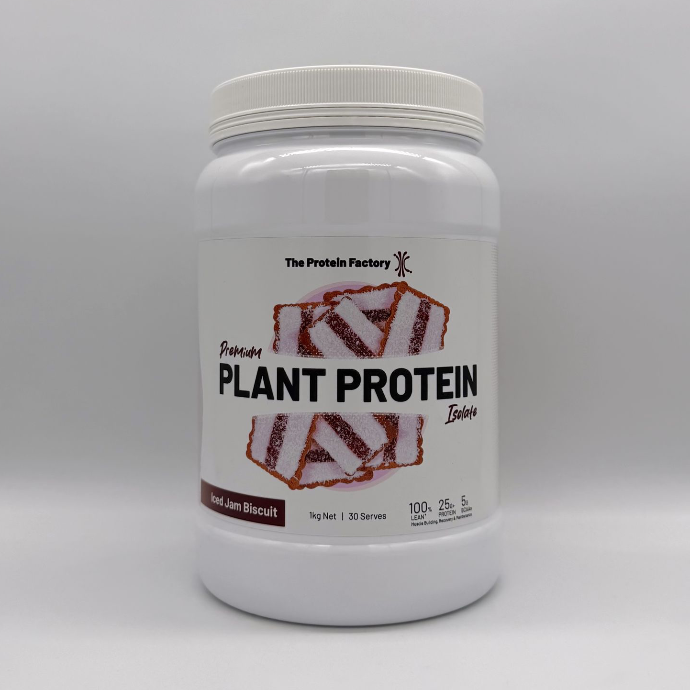
- Iced Jam Biscuit
- Ginger Kisses
Historically, most studies highlight Whey Protein Isolate (WPI) as the gold standard in promoting muscle adaptations to exercise, however recent years have found that plant protein promotes similar outcomes to animal protein sources.
Majority of our staff and athletes here at The Protein Factory are plant-protein enthusiasts, but don’t let that sway you, see the science for yourself.
Whey protein is derived from whey, which is a by-product of cheese or yogurt production, where it is processed to separate and remove majority of the carbohydrate and fat content.
The Protein Factory uses Whey Protein Isolate, the highest quality grade of whey protein, which provides a higher concentration of protein, while being gentle on the stomach. Our WPI is sourced from grass-fed New Zealand dairy, making it one of the best on the market.
Plant protein can be derived from a variety of plants, including pea, soy, rice, pumpkin seed, hemp seed, fava bean, almond and many more.
The Protein Factory sources our Pea Protein Isolate from Canadian grown peas. Pea Protein Isolate is derived from yellow split peas, where the carbohydrate content is separated and removed from dried and ground peas. Pea Protein Isolate is made completely from plants, making it vegan and vegetarian friendly.
Since pea protein is naturally dairy and lactose free, most people find it sits better in their stomach, providing a lighter feeling compared to whey protein. For those who experience stomach upset or a heavy feeling after consuming WPI, we suggest trying pea protein for a gut-friendly alternative.
Whey and Pea Protein Isolate are both highly digestible, only taking 1-2 hours to be absorbed and utilised by the body, meaning you can start building and repairing muscle faster and more efficiently after a workout.
You may have noticed that plant protein is often significantly cheaper than whey protein. This does not mean plant protein is a lower quality protein, but rather the high demand for whey protein is driving up its cost.
When demand is higher than the supply, the food and supplement industry can increase prices as consumers are often willing to pay a premium. The Protein Factory is comitted to providing cheaper alternatives to other brands, so we will only increase our prices when our suppliers do (but never to make more profit!).
With the costs of living increasing, now is the perfect time to switch to a more cost-effective protein, such as Pea Protein Isolate.
While the topic of plant protein and estrogen remains a controversial debate, majority of research has found there is no significant relation between the consumption of plant protein and increased estrogen levels in the body.
The idea that plant protein increases estrogen levels comes from soy products containing a high concentration of isoflavones, which is a type of plant estrogen (phytoestrogen). Phytoestrogens can bind to estrogen receptors, however do not lead to rises in total estrogen levels when consumed in normal dietary amounts.
Other plant proteins, including pea protein, do not contain phytoestrogens and have no direct impact on estrogen levels in the body.
The short answer is yes!
This is the most common questions asked by customers. However, it is a bit more complicated than a yes or no response.
A food is considered a complete protein when it contains all nine essential amino acids in sufficient amounts. Essential amino acids are required to be consumed through food because the body cannot make them on its own. If a protein is not complete, the body still utilises the amino acids that are present, which means it is not a ‘lesser’ protein source.
While pea protein contains all nine essential amino acids, it is slightly lower in methionine and cysteine. It is important to consider that protein powder is generally not one’s only protein source throughout the day, so you will be getting these ‘missing’ amino acids in other protein sources, including nuts, seeds, oats, grains, soy products including tofu and soy milk, dairy, meat and eggs. You also do not need to consume every essential amino acid in every meal, as long as a variety of protein sources are consumed throughout the day, you will be giving your body the amino acids it needs to function.
Nope! They are exactly the same.
The most important consideration when picking a protein powder is generally ‘will it help me build muscle?’ Both pea protein and whey protein are excellent at supporting muscle growth when paired with resistant training.
Research has found, if a person was to consume the same amount of protein per day, whether it was from pea protein or whey protein (with the same number of calories consumed), both promoted similar outcomes for muscle growth, muscle strength, body composition and performance adaptations. This is because both protein sources contain sufficient amounts of an amino acid called leucine, which is responsible for stimulating muscle adaptations to exercise, or ‘Muscle Protein Synthesis.’
While pea protein is not as creamy as whey, The Protein Factory’s Pea Protein Isolate is not gritty at all! Our Pea Protein Isolate mixes smoothly into water, or plant-based milks for an extra protein boost.
Diets high in plant proteins contribute to lower levels of inflammation, and reduce the risk of a range of conditions including cardiovascular disease, cancer, type 2 diabetes, osteoporosis, Alzheimer’s disease and dementia.
The opposite is often true for diets high in animal-based foods, where a high intake of meat and dairy products is linked to an increased risk of developing chronic conditions.
By making small swaps towards a more plant focused diet, including making the switch from whey protein to plant protein, you can begin to reduce the risk of developing long-term health conditions.
When comparing a 30g serve of WPI and Plant Protein Isolate, they are almost like-for-like in terms of calories and macronutrients.
| 30g Whey Protein Isolate | 30g Pea Protein Isolate |
Calories | 117 Cal | 117 Cal |
Protein | 24g | 24g |
Fat | 1.6g | 2.3g |
Carbohydrate | 2.2g | 0.6g |
Lactose | 0.4g | 0g |
Fibre | 0.6g | 0.8g |
Sodium | 194mg | 261mg |
If you are still unsure about which protein powder is the best option for you, come in-store to chat with our friendly, qualified staff or send us an email at hello@theproteinfactory.com.au for a more tailored response.